
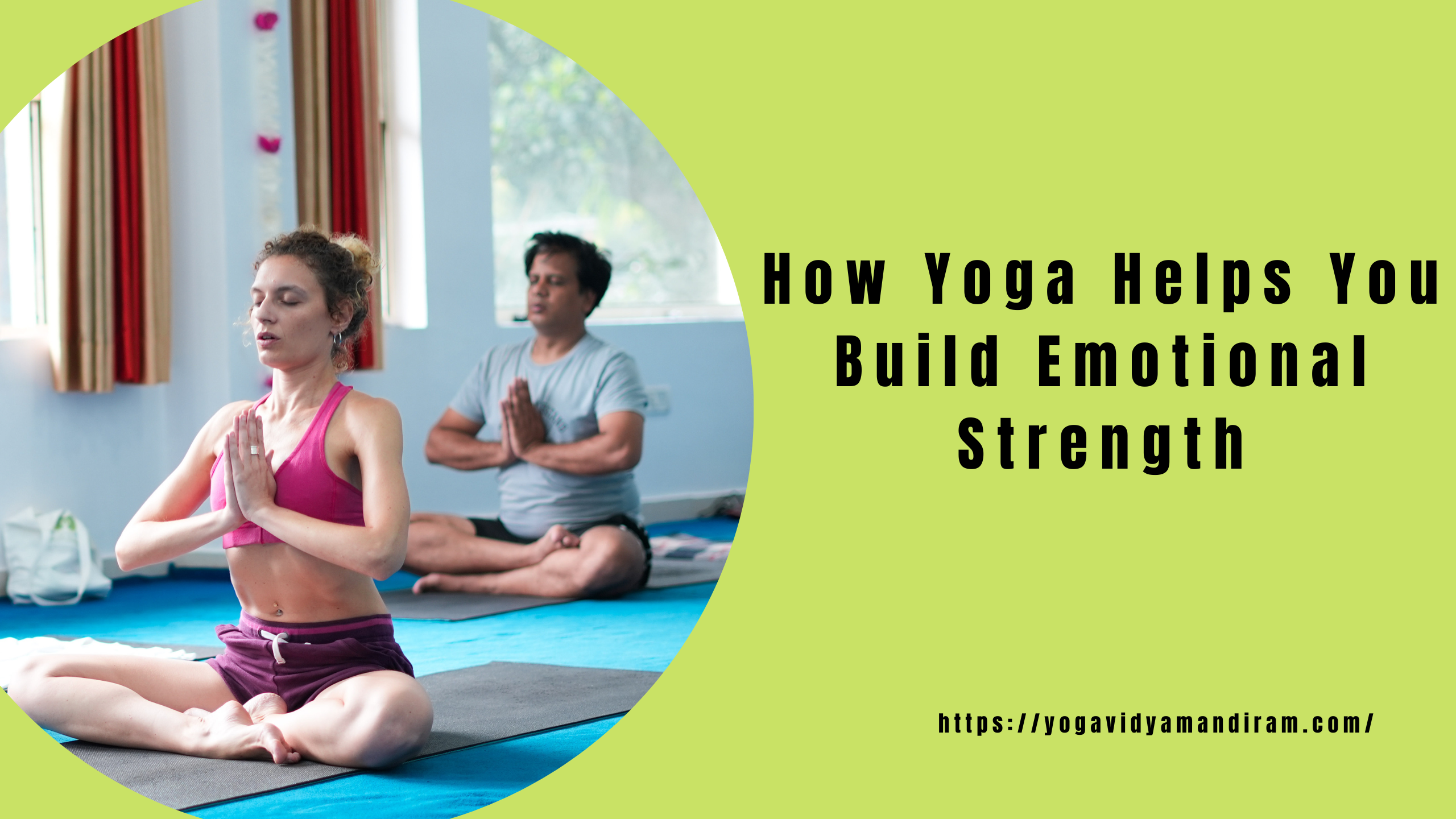
The search of emotional strength is needed as never before in a world that can seem to be chaotic and overwhelming. It could be your best friend in the face of various issues that manifest every day in life or in solving unforeseen problems, so resilience may be the key to success. Move to yoga a practice that is eternal and has more of strengthening the body, mind and body rather than weakening it. think of drifting through postures as you form an uncompromising basis of your emotions in the same motion. This blog post will discuss the way yoga helps to maintain emotional stability, self-awareness and enables you to go through life gracefully and with confidence.
Introduction to the Concept of Emotional Strength and why it is important
Emotional strength is such an anchor to the tempest of life. It helps us to handle all these problems, recover after a failure, and preserve our health in the state of chaos. In this modern fast-paced world, this inner strength is a developing need rather than ever before. But how do we build it? Yoga offers one of the potent instruments that have withstood the time.
It is hard to imagine that there is a practice that would not only make you feel stronger but also help you become more emotionally balanced and stabilized. Yoga can offer exactly that, a harmonious combination of body, breathing exercises and mental effort that will change your emotional topography. No matter how much stress you have everyday or how emotionally troubled you are, yoga has ways to discover how to understand and take care of your emotional self.
Together we shall see how this old-time practice can make you strong and capable of emotions so that you can succeed in all the fields of life. We shall explore the disruptive yoga advantages in resiliency building!
Explanation of how yoga can help build emotional strength
Yoga can be used as a strength boosting tool in emotions. Yoga provides a comprehensive method of emotional wellness through the combination of movement, breathwork, and mindfulness.
You get to know how to deal with pain in various positions, both physically and psychologically. The practice promotes the strength to deal with life challenges.
The self awareness of yoga is caused by its rhythmic nature. It allows people to be aware of their thoughts and feelings without necessarily judging them. This consciousness is essential in the development of emotional intelligence.
Breathing mindfulness grounds your mind when you are going through a bad time. They also present immediate relaxation of stress and anxiety by relaxing the nervous system.
Slowly, the practices lead to the feeling of empowerment. You have a way of controlling your emotions instead of being overwhelmed with them.
Yoga brings inner strength that transpires in everyday life with practice. Every session establishes the basis towards increased emotional stability in the future.
Physical benefits of yoga that lead to emotional strength
There are numerous physical advantages of yoga that can be of great help to the emotional power. You are also getting rid of tension as you stretch and tighten your body. This is a physical relief that promotes a feeling of peacefulness and clarity.
A better flexibility is not only a better physical performance, but also gives you an opportunity to tackle challenges in life with a lot of ease. When you are physically deft, it also means being mentally deft.
Moreover, consistent exercise increases the endorphins – feel good hormones that can elevate your mood immediately. Regular workouts in yoga will enhance sleep patterns, which will result in increased energy during the day.
The self-awareness is stimulated by the focus on the posture in yoga. Being tall also changes your perception of yourself and your relationships with others, developing confidence as you go. In every pose, you will get a chance to get yourself back on track physically and psychologically as you get stronger.
More Details: 300 Hour Yoga Teacher Training in Rishikesh
Mental benefits of yoga for building emotional resilience
Yoga is a great source of mental contributions contributing to emotional strength. By practicing, one gets used to being nonjudgmental in the way thoughts are perceived. This forms a safeguard against negative emotions.
Yoga is connected with mindfulness. It recommends the act of living in the present and the need to recognize emotions as they come. This consciousness makes it possible to avoid being overwhelmed by emotional reaction to stressors.
Yoga meditation leads to inner tranquility and sanity. With the attention given to breath and movement, distractions are removed, so the practitioners can have more time to reflect and comprehend the triggers of their emotions.
Also, frequent yoga classes can help to decrease the level of anxiety. Monotonic movement of poses induces relaxation effects in the body, which in the long run leads to better mood regulation.
When mental chatter is reduced by means of directed practice, people become able to handle the issues in their lives. This is because they develop an adaptive attitude that promotes growth other than stagnation in difficult circumstances.
Breathing techniques and mindfulness practices in yoga for managing emotions
The yoga breathing exercises are essential in emotional control. When you put your attention on breathing, you form a connection between the body and the mind. This relationship can assist in planting you when you are in emotional disturbance.
Such postures as Ujjayi breath or Nadi Shodhana promote deep breathing and breathing out. The practices improve oxygen circulation and concentration as well as relaxation and clarity of thought. The more you get used to breathing under control, the more you become aware of your mood.
These techniques are also well complemented by mindfulness practices. There is no distraction when you are all there on the mat. This emphasis enables one to look inward, with no condemnation of inner feelings.
Regular mindfulness meditation incorporation improves over time emotional control. Through practice, you eventually develop and are in a better position to face the problems of life with grace and strength.
Tips for incorporating yoga into your daily routine for maximum benefit
Start small. Dedicate just ten minutes each morning to simple stretches or sun salutations. This sets a positive tone for your day.
Create a designated space in your home. Whether it’s a corner of your living room or a peaceful nook, having a specific area can help you focus and connect with your practice.
Use reminders. Set alarms on your phone or leave sticky notes around the house to prompt you to roll out your mat throughout the week.
Incorporate yoga into existing routines. Try practicing while waiting for water to boil or during TV commercial breaks.
Join online classes that fit into your schedule. The flexibility of virtual sessions means you can practice whenever works best for you.
Lastly, be gentle with yourself. Progress may take time, but every moment spent on the mat contributes to building emotional strength over time.
Other activities or practices that complement yoga in building emotional strength
Incorporating mindfulness meditation alongside yoga can deepen emotional strength. This practice enhances self-awareness, allowing you to observe your thoughts and feelings without judgment.
Journaling is another powerful tool. Writing about your experiences fosters reflection and clarity, helping you process emotions effectively.
Engaging in creative activities like painting or music can also nurture emotional resilience. Art provides an outlet for expression, channeling complex feelings into something tangible.
Spending time in nature has a calming effect on the mind. Nature walks or hikes allow for quiet contemplation, reducing stress and boosting overall well-being.
Additionally, connecting with supportive communities through group classes or workshops creates a sense of belonging. Sharing experiences with others can reinforce your emotional journey and provide valuable insights.
These complementary practices enhance the benefits of yoga by promoting a holistic approach to building emotional strength.
Conclusion emphasizing the power of yoga in developing emotional resilience and well-being.
Yoga is an effective method of building emotional capacity and strength. It is a combination of physical exercise, breathing exercises, and mindfulness, which assist human beings to solve the problems of life in a dignified way. With practice, you can develop a sense of an inner equilibrium that will enable you to meet stressors with a head on.
Yoga gives you a better insight into your feelings by uniting both the mind and body. It gives the room to see emotions without criticism. This consciousness comes to play with emotional control and offers you coping skills in difficult situations.
Regardless of your level of experience with yoga (both beginners and advanced), a welcome to the teachings of the practice can bring significant transformations to the emotional terrain. The more you practice, the more you will probably be better suited to deal with reality when adversity strikes and have a sense of peace inside.
Yoga every single day forms routines that foster health in the long term. It is important to keep in mind that each and every small contribution helps to create sustainable emotional strengths. So unfold your mat and make that first step to change not only your mood but also your attitude to life.
Leave a Reply