
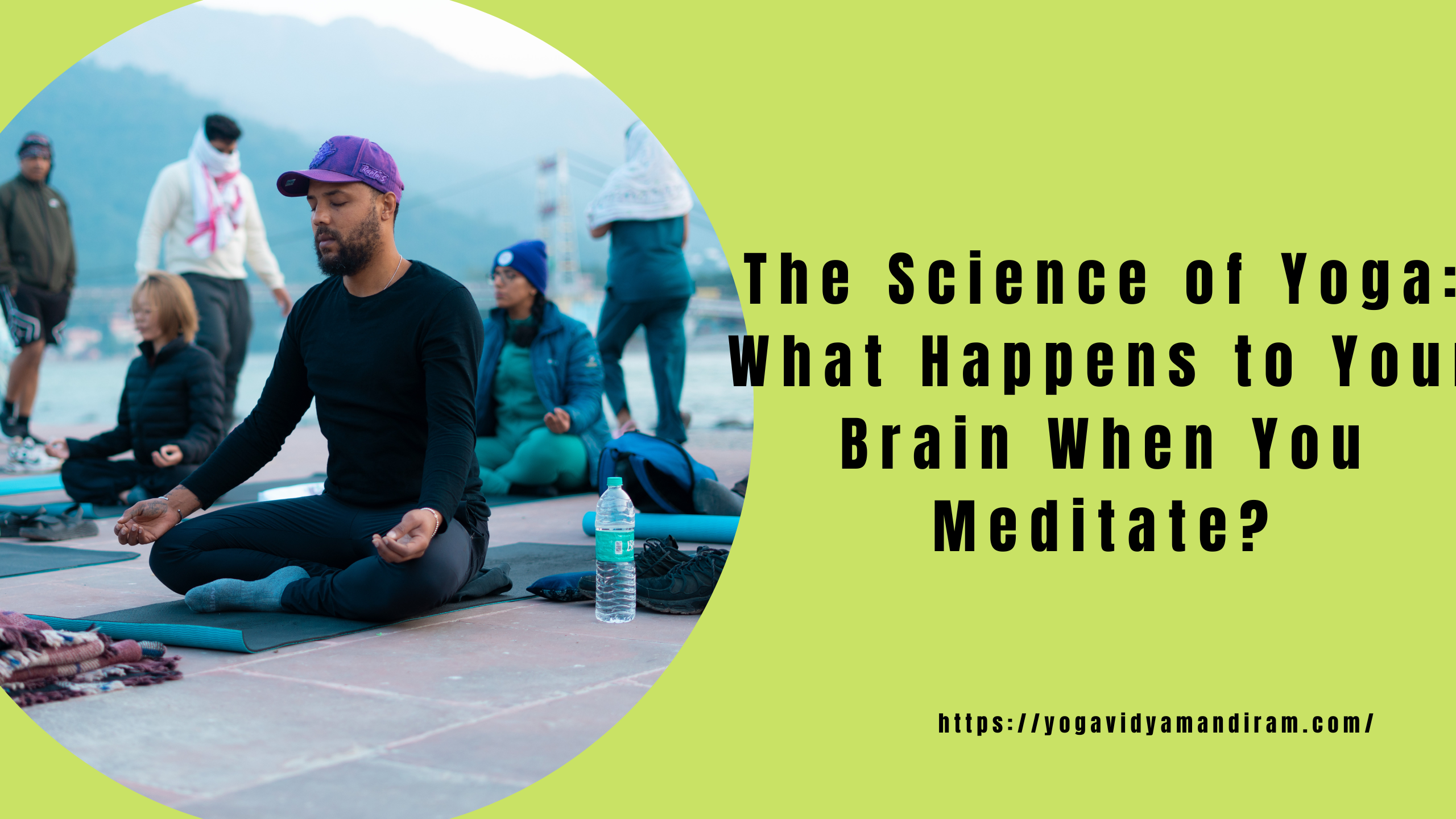
The yoga practice, an ancient art, provides a calming effect in a world that seems disordered with the stress levels soaring and our minds running with a list of endless things to do. But what should we say, there is still more than peace in those profound breathing and relaxation of movements? And this is my welcoming to the exciting point of neuroscience and mindfulness. Now in this blog post we will explore the science of yoga, so how not only does meditation relax your spirit but it actually changes your brain. Since improving mental skills to redefining neural connection, learn how these age-old processes can improve your clarity of mind and mood. Ready to roll out your mat and breathe deeply and come along with me into the marvelous impacts that yoga has on our brains!
Introduction to Yoga and Meditation
The transformative effect of yoga and meditation have been revered long due to its body and mind effects. When practitioners unravel their mats, they get on a path that extends beyond stretching or relaxing. It is the journey of the mind- a kind of immersion of how these ancient traditions can reconfigure the way our brain works in stunning manners.
Think of being able to unlock a treasure trove of clarity of mind, emotional stability and alleviation of stress with the help of simple exercises on the mat. The science of yoga and meditation is slowly unveiling some interesting facts about the processes that occur in our brains when we do things that are mindful. The impacts are far-reaching whether it is in soothing the racing minds or improving concentration.
You can enroll yourself in yoga teacher training or you can just be interested in the mental benefits of such practices, getting to know how these practices can positively influence your brain opens up new possibilities when it comes to personal development. Having a closer look at this complex relationship between mindfulness and neuroscience that will transform how you think about well-being will help.
The Brain and its Functions
The brain is a complicated part of our body that acts as the control centre of our body. It controls not only the simplest life survival mechanisms but also the highest level thinking.
We depend on it to move around, communicate and make decisions. It is in this complex system of neurons that every thought or action is born.
The brain has different regions that have specialized in different tasks. The frontal and the temporal lobes process sound and language and reasoning respectively.
The limbic system controls the emotions mostly; it consists of such structures as amygdala and hippocampus. This enables us to feel happy, scared or sad depending on how we relate with the world.
Knowing the interplay of these areas can help us appreciate such practices as yoga and meditation. All these ancient traditions are stimulated by our neural systems to boost our well-being.
Visit Us: 200 Hour Yoga Teacher Training in Rishikesh
Understanding Brainwaves: Alpha, Beta, Theta, Delta
Brainwaves are crucial indicators of the mental state. They change depending on whatever it is we are doing and how we feel.
Alpha waves are at the time when one is relaxed, but alertness- think meditation or daydreaming. These waves enhance imaginations and tranquility which enables deep relaxation without sleep.
When we are in focus and when we are awake, Beta waves reign. They help in solving problems and critical thinking but when taken in excess, they may have stressful effects.
Theta waves come about during light sleep or deep meditation. It is a state that encourages intuition, feelings and recollections; where new ideas are likely to crop up.
Finally, the deepest of the sleep is indicated by delta waves. In this case, the processes of healing occur as the body is recovering against the everyday stresses.
All the brainwaves have their own role in our experiences particularly when we are doing yoga to have a balance between the two states.
How Meditation Affects Brainwaves
Meditation induces a considerable change in the brainwave activity. As you go into a meditative state, your brain goes out of the active thinking beta waves to slower alpha waves. This transition promotes leisure and improves the imagination.
Theta waves appear as you continue meditating. These are associated with profound states of relaxation and extreme intuition. Regular practice may be useful to train your mind to get to these states with ease.
Some even in an advanced stage, experience delta wave activity when in the meditation. Delta waves are usually found when one is in deep sleep, but may also occur in meditative deep states.
This variation of brainwaves is not only a sign of a change in consciousness, but is somehow involved in emotional regulation and relieving of stress. This practice has the potential to completely change the functioning of our thought and emotion processing in our day to day lives.
Physical Changes in the Brain During Meditation
Meditation produces interesting brain physiological activity. Among the changes that are also worth mentioning is the rise of the density of the gray matter, specifically in the regions that are related to memory, emotional regulation, and self-awareness.
With the regular interactions of the practitioners, research indicates a transition towards a higher neural connection. This enhances interaction among the various parts of the brain and creates clarity of mind.
Furthermore, meditation usually causes the amygdala, the part associated with the response to stress, to become less active. This decrease promotes emotional stability and stability to anxiety.
Another part of the brain that performs better with practice is the prefrontal cortex. This division of the brain controls decision making and impulse control which increases willpower and concentration.
Investigating these changes brings to the fore the process in which meditation trains our brains to perform optimally in terms of emotional wellbeing and cognition. Nobody has a more profound transformation than people can undergo when they engage with their practice more deeply as it is not confined to the time spent on the mat.
Emotional and Mental Benefits of Yoga and Meditation
Yoga and meditation have very powerful emotional payoffs that serve as a relaxation to anxiety and tension. When done on a routine basis, they may assist people to be resilient to the problems of life.
These practices lead to self awareness. When you pass through poses or concentrate your breathing, you get to know more about your thoughts and feelings. With such increased awareness, emotional regulation becomes easy.
Besides, yoga and meditation foster mindfulness. Being there facilitates non-judgment of feelings. This may result in reduction of negative thinking habits.
The feeling of community that is usually experienced in a course of yoga brings bonds that help to overcome loneliness. Emotional support and understanding are improved by sharing experiences with other people.
Also, according to scientific research, regular practice raises the level of serotonin, the so-called feel-good hormone, which improves life in general and happiness in particular.
Scientific Studies on the Effects of Yoga and Meditation on the Brain
The science has revealed some interesting facts about the way yoga and meditation change the functioning of the brain. Many studies point out that the constant practice is capable of enhancing the grey matter density of regions associated with memory, emotional control, and empathy.
A historic study reported in the journal, Psychiatry Research: Neuroimaging, reported a substantial variation in brain structure of participants who undertook regular mindfulness exercises. Hippocampus, which is a key in learning and memory, demonstrated significant enlargement.
One more study proved that only several weeks of meditation sessions could lead to better concentration by decreasing the mind-wander practice. This applies especially to any person who is undergoing Yoga Teacher Training where attention is of major importance.
Moreover, functional MRI images also demonstrate the changed activity in the process of meditation. Areas that are linked to stress response are deactivated, whereas the areas that are linked to relaxation are activated. These results confirm the idea that yoga and meditation have deep effects not only on the physical but also on the mental as they change our brains with time.
Practical Tips for Incorporating Yoga and Meditation into Your Daily Routine
Start small. Devote only five minutes a day to yoga or meditation. Such short-term commitment may establish the basis of future sessions of longer periods.
Establish a special room at home. A small unmistakably quiet place contains fewer distractions, and you will find your practice much more pleasant and productive.
Add phone or calendar reminders to create some consistency. The habituation is created by frequency, therefore it is desirable to do it as often as possible daily.
Meditate by using breathing exercises in your everyday life. Taking a break to get yourself straight and in between tasks or during lunch, find time to make deep breathing.
Enroll in online courses or in workshops in the area concerning yoga teacher training. Education by seasoned teachers encourages inspiration and association in the society.
Finally, you should be patient with yourself as you employ these practices in everyday life. The development is slow, emulate every slight progress of mindfulness.
Conclusion: The Power of Mindfulness through Yoga and Meditation
The experience of yoga and meditation shows the significant impact that these activities can have on our brain and general health. As we explore the science, we find out that mindfulness is not a fad but is an effective instrument in improving mental clarity, emotional stability, and cognitive ability.
It is not merely that, when you are doing yoga teacher training or even just at home, you are merely moving your body. You are vigorously reorganizing the structure of your brain. The good things not only finish at the mat, the benefits assist you to develop peace in yourself and handle life challenges with grace.
Mindfulness as a result of yoga can bring about permanent alterations in the way you think and feel. It creates the ways of getting deeper into oneself, creating resilience to everyday life stressors. You can take personal development or you are just thinking about becoming a certified instructor, adding regular meditations to it will make your experience much higher.
When travelling this transformational road, it is important to keep in mind that each time we breathe with each exposure to meditation we are anchored to the moment, and a tender reminder of the fact that it is in each one of us that power to bring about change not only in our lives, but those around us as well. Learning about mindfulness in yoga makes life more fulfilling, and it is a process that should be taken in full.
Enrol for the same today. Yoga Vidya Mandiram is one of the Best yoga school in Rishikesh where you get trained by experts.
Leave a Reply