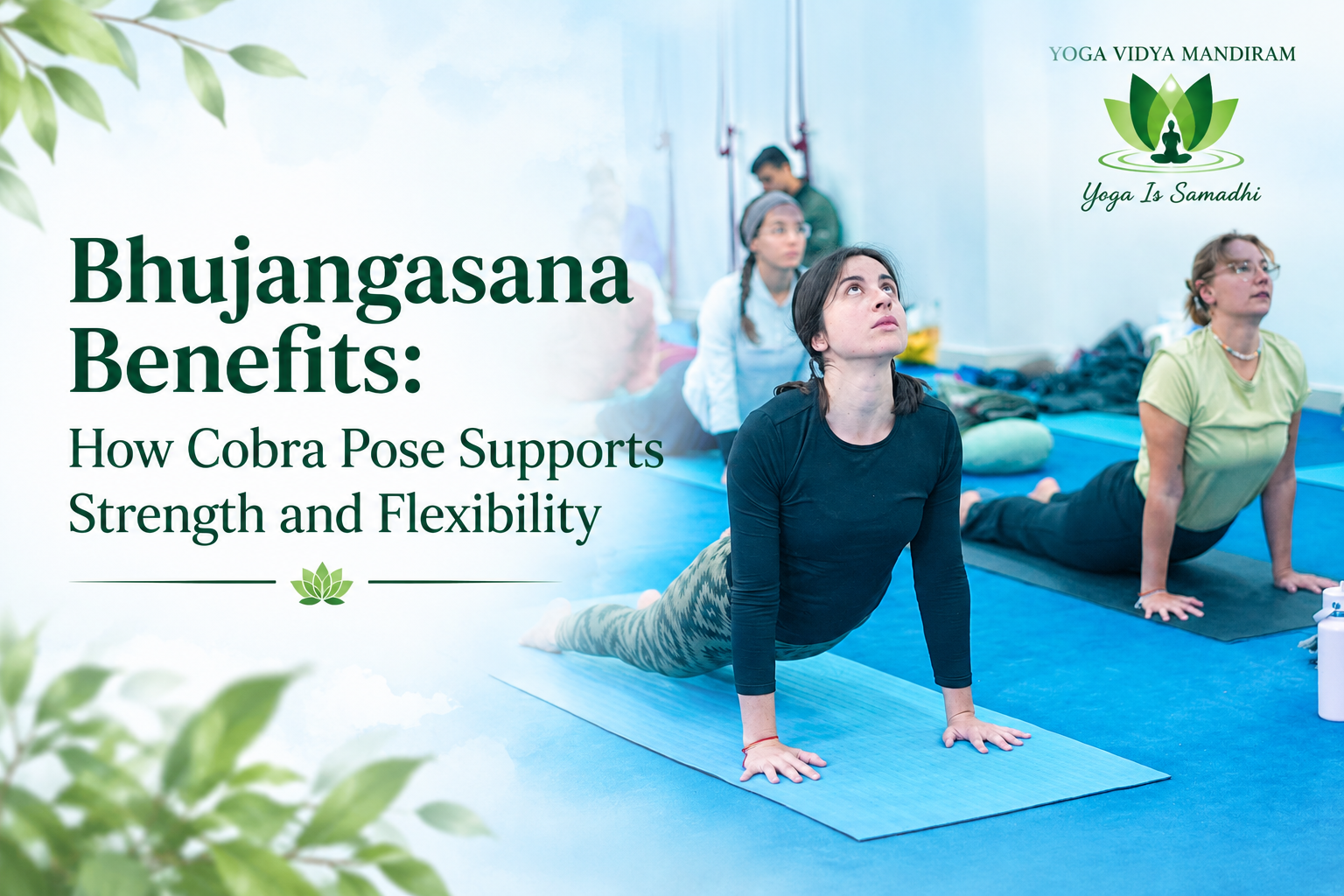
Cobra Pose, which is also called Bhujangasana, is one of the popular backbending poses in yoga. This pose is usually part of Hatha Yoga. Is also often done during Sun Salutations and other yoga routines. The pose asks you to lift your chest while keeping your body still which gives you a chance to build strength, improve flexibility grow body awareness and focus on your breathing.
No matter if you are just starting with yoga or have been practicing for a while learning Cobra Pose with the form can teach you how the spine, shoulders, chest, arms and core all work together. For people who want to learn more, about yoga poses like Cobra Pose are also a part of understanding how to move safely and how to put together a good sequence.
What Is Bhujangasana?
The word Bhujangasana comes from the Sanskrit words Bhujanga meaning “cobra” or “serpent,” and Asana meaning “pose” or “posture.” The posture resembles a cobra raising its head, which’s why it is commonly called Cobra Pose.
Bhujangasana is generally practiced lying on the stomach. The palms are placed near the chest, the legs remain extended and the upper body is gently lifted while maintaining awareness of the spine and shoulders.
The goal is not to lift as high as possible. Instead the emphasis should be, on controlled movement, comfortable spinal extension, steady breathing and proper alignment.
How to Practice Bhujangasana
Follow these basic steps to practice Cobra Pose:
- Lie on your stomach with your legs stretched out behind you.
- Keep the tops of your feet comfortably grounded on the mat.
- Place your palms beside your chest, with your elbows close to your body.
- Take a slow breath in and gently lift your head and chest.
- Keep your shoulders relaxed and away from your ears.
- Use your back muscles to support the movement rather than relying entirely on your arms.
- Keep the pelvis and legs grounded as you maintain a comfortable spinal extension.
- Hold the posture for a few steady breaths.
- Slowly lower your chest back toward the mat.
Move gradually and avoid forcing the backbend. Your range of motion should feel controlled and comfortable.
Bhujangasana Benefits
1. Supports Spinal Mobility
One of the key benefits of Bhujangasana is that it introduces controlled spinal extension. When practiced with proper alignment, it can help develop awareness of movement through the spine and encourage comfortable mobility.
Regular yoga practice that includes different types of spinal movements can contribute to balanced movement patterns.
2. Strengthens the Back Muscles
Bhujangasana engages several muscles around the back and trunk. Maintaining the posture requires active participation from the spinal extensors and supporting muscles.
Developing strength through controlled yoga postures can help improve body awareness and stability during movement.
3. Opens the Chest and Shoulders
Cobra Pose encourages the chest to open while the shoulders move into a more extended position. This can be particularly useful when practicing after movements that involve rounding the upper back.
Rather than pushing the shoulders backward forcefully, focus on creating space across the chest while keeping the shoulder blades controlled.
4. Improves Body Awareness
Bhujangasana is more than a physical backbend. It provides an opportunity to observe how different parts of the body work together.
Practitioners can pay attention to the position of the pelvis, legs, shoulders, arms, and spine while coordinating movement with the breath.
5. Supports Flexibility
With consistent and appropriate practice, Bhujangasana can contribute to flexibility in areas such as the front of the torso and shoulders while developing spinal mobility.
Flexibility should be developed gradually. Avoid pushing into a deep backbend simply to achieve a greater range of motion.
6. Encourages Better Postural Awareness
Modern lifestyles often involve prolonged sitting and screen use. Practicing a variety of yoga movements can help develop awareness of spinal position and movement.
Bhujangasana introduces spinal extension and chest opening, making it a useful posture to include as part of a balanced yoga sequence.
7. Develops Breath Awareness
The position of the chest and torso during Cobra Pose provides an opportunity to observe breathing patterns. Practitioners can use slow, steady breaths while maintaining a relaxed face, jaw, and shoulders.
Combining movement and conscious breathing is an important aspect of a mindful yoga practice.
Bhujangasana and Strength Building
Although Bhujangasana is often described as a flexible posture it also needs muscles to work. The back muscles help hold the spine in a position while the arms and shoulders help keep the body steady.
Because of this Cobra Pose can be seen as a mix of movement, strength, balance and focus of just a stretching move.
The difficulty of the posture can also be changed based on how experienced the person’s how flexible they feel.
Bhujangasana for Yoga Practice and Teacher Training
I have found that understanding each yoga asana is a part of building a balanced yoga practice. Students who are in a 200 hour Yoga Teacher Training in Rishikesh can look at postures such as Bhujangasana by studying how to align the body learning the anatomy, practicing breathing trying modifications and using good teaching methods.
I think learning how to teach Cobra Pose safely means more than showing the posture. A yoga teacher must know how to prepare the body for Cobra Pose, what alignment problems to watch for in Cobra Pose, how to vary the pose, what situations to avoid and how to change Cobra Pose for students.
I see that this knowledge helps teachers make more effective yoga classes.
Common Mistakes to Avoid in Bhujangasana
Avoiding common mistakes can make the practice more comfortable and controlled.
Lifting Too High
A higher chest position does not necessarily mean a better Cobra Pose. Excessive lifting can create unnecessary compression or discomfort in the lower back.
Straightening the Arms Too Much
Bhujangasana does not require the elbows to be completely straight. Keeping some bend in the elbows can help practitioners find a more appropriate range of motion.
Shrugging the Shoulders
Keep the shoulders relaxed and away from the ears. Focus on maintaining space around the neck.
Using Only the Arms
The arms should support the posture, but the back muscles also play an important role. Avoid pushing the body upward entirely through the hands.
Holding the Breath
Breathing should remain smooth and comfortable. Avoid holding your breath while trying to maintain the pose.
How to Modify Bhujangasana
Beginners can start with a version by lifting the chest just a little off the floor. The focus should be on comfortable movement of the spine not on how high the chest goes.
You can also try keeping the elbows bent and close to the ribs. This helps build strength and improve mobility over time.
If you feel any pain— sharp or lasting pain, in the back, shoulders or wrists—stop the movement. Come out of the posture. Get advice from a qualified professional. Pay attention to your body. It’s better to take things.
Who Should Be Careful With Bhujangasana?
Bhujangasana may not be appropriate, for everyone especially if you have injuries or conditions that affect the spine, shoulders, wrists or abdomen. Pregnant people should get guidance from a healthcare professional and an experienced prenatal yoga teacher before doing prone postures. Always work within your ability and do not force the spine into a deeper backbend.
Bhujangasana in a Balanced Yoga Sequence
Cobra Pose can be added to routines that feature forward bends, twists, neutral spinal movements and other types of extension. Including kinds of movement helps make a yoga practice more well-rounded.
A teacher might include Bhujangasana in a up phase as part of a modified Sun Salutation in a backbend series or, during a regular Hatha Yoga class. The choice depends on the student’s level and the overall goal of the session.
Frequently Asked Questions About Bhujangasana
What is Bhujangasana?
Bhujangasana is a yoga posture commonly known as Cobra Pose. It is practiced lying on the stomach and involves gently lifting the chest while maintaining controlled spinal extension.
What are the main benefits of Bhujangasana?
Bhujangasana can help develop back strength, spinal mobility, chest and shoulder opening, body awareness, and coordination between breathing and movement.
Is Bhujangasana good for beginners?
Yes, beginners can practice a gentle version of Bhujangasana. It is important to start with a comfortable range of motion and learn proper alignment rather than trying to achieve a deep backbend.
How long should you hold Bhujangasana?
The duration depends on your experience and the style of practice. Beginners can start with a few comfortable breaths and gradually develop their ability to hold the posture without strain.
Is Bhujangasana part of Hatha Yoga?
Yes. Bhujangasana is commonly practiced in Hatha Yoga and is also frequently incorporated into other yoga styles and sequences.
Conclusion
Bhujangasana is a useful yoga posture that helps you build strength, increase flexibility, improve spinal mobility, open the chest and become more aware of your body. When you practice Cobra Pose with breathing and correct alignment, Bhujangasana can become a strong part of a balanced yoga routine.
If you want to learn more than single postures joining a 200‑hour Yoga Teacher Training in Rishikesh can give you a deeper understanding of asana, anatomy, pranayama, meditation, philosophy, proper alignment and how to teach. A steady and mindful practice of Bhujangasana can help you build a base, for your entire yoga journey.
Leave a Reply