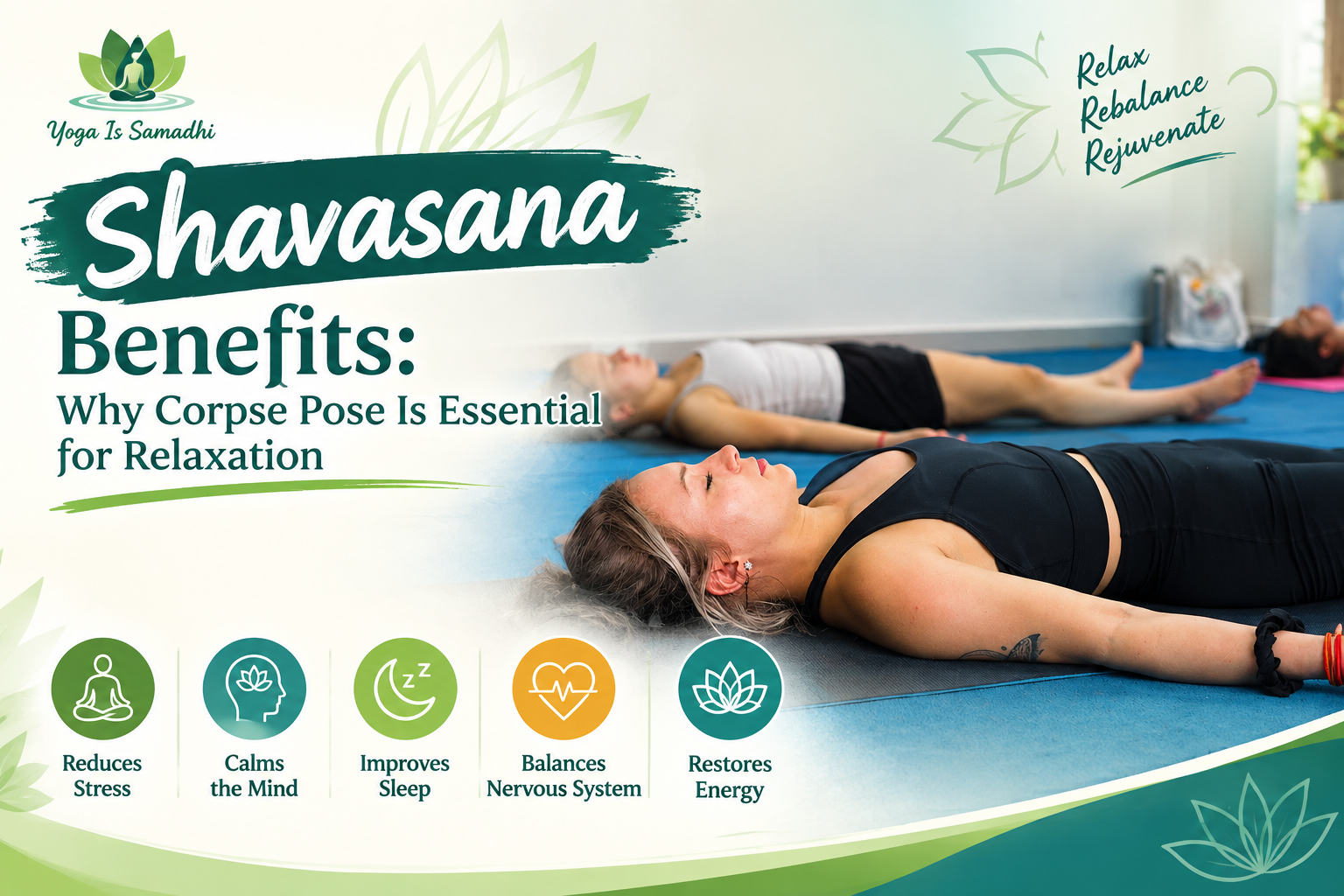
Shavasana, also known as Corpse Pose, is one of the simplest yet most important postures in yoga. Traditionally practiced at the end of a yoga session, Shavasana allows the body to rest, the breath to become natural, and the mind to settle after physical practice.
Although the posture looks easy because it involves lying still, practicing Shavasana with awareness can be surprisingly challenging. It encourages practitioners to release unnecessary physical tension and observe the body and mind without trying to control every thought.
For beginners and experienced practitioners alike, understanding the benefits of Shavasana can help create a more complete and balanced yoga practice.
What Is Shavasana?
The Sanskrit word Shava means “corpse,” while Asana means “pose” or “posture.” Shavasana therefore translates as Corpse Pose.
To practice the posture, you lie comfortably on your back with the legs relaxed, arms resting beside the body, palms generally facing upward, and eyes closed.
The objective is not simply to sleep. Instead, the practitioner remains physically relaxed while maintaining gentle awareness of the breath, body sensations, and mental activity.
How to Practice Shavasana
Follow these simple steps:
- Lie comfortably on your back on a yoga mat.
- Extend your legs naturally and allow the feet to fall outward.
- Rest your arms beside your body with some space between the arms and torso.
- Turn the palms upward if comfortable.
- Close your eyes gently.
- Relax the muscles of your face, jaw, shoulders, hands, abdomen, and legs.
- Allow your breathing to become natural without forcing it.
- Observe the sensations in your body and the movement of your breath.
- Remain still for several minutes.
- When you are ready to finish, gradually deepen your breathing and move slowly before returning to a seated position.
The length of the practice can vary depending on the type and duration of the yoga session.
Shavasana Benefits
1. Encourages Deep Relaxation
One of the primary benefits of Shavasana is its ability to create a period of deep physical relaxation after active yoga practice.
As the body becomes still, practitioners can consciously release muscular tension and allow themselves to rest.
2. Helps Calm the Mind
Shavasana provides an opportunity to step away from constant activity and simply observe the present moment.
Instead of trying to eliminate thoughts, practitioners can notice thoughts as they arise and gently return their attention to the breath or body.
3. Supports Mindfulness
The stillness of Corpse Pose can encourage greater awareness of physical sensations, breathing patterns, and mental activity.
This makes Shavasana a valuable mindfulness practice as well as a physical resting posture.
4. Allows the Body to Rest After Yoga
A yoga session may include stretching, strengthening, balancing, and challenging movements. Shavasana provides time for the body to transition from active movement to rest.
It can help create a clear ending to the physical practice.
5. Develops Body Awareness
While lying still, you can observe sensations throughout the body without immediately reacting to them.
This can help develop greater awareness of areas of tension and relaxation and encourage a more mindful relationship with the body.
6. Encourages Natural Breathing
In Shavasana, there is usually no need to deliberately control the breath. Instead, practitioners can allow breathing to become comfortable and natural.
Observing the breath without changing it can be a simple way to cultivate awareness.
7. Helps Develop the Ability to Rest
In modern life, many people are accustomed to constant activity. Shavasana provides a structured opportunity to pause.
Learning to become comfortable with stillness can be an important part of developing a balanced yoga practice.
Why Is Shavasana Practiced at the End of Yoga?
Shavasana is commonly placed at the end of a yoga class because it provides a transition from active movement to rest.
After practicing asanas, the body may feel energized, stretched, or physically challenged. Remaining still for a few minutes allows students to observe the effects of their practice.
Ending with Shavasana can also help students leave the class feeling grounded and present rather than immediately moving from physical practice into daily activities.
Shavasana and Meditation
Although Shavasana is primarily practiced as a relaxation posture, it can also become a gateway to meditation.
The body remains still while awareness is directed toward the breath, sensations, or present-moment experience.
However, Shavasana and meditation are not exactly the same. Shavasana emphasizes conscious physical relaxation, while meditation can involve a variety of specific methods and objects of attention.
Common Mistakes in Shavasana
Trying Too Hard to Relax
Relaxation cannot always be forced. If you are consciously trying to make every muscle relax, you may create additional tension.
Instead, gradually observe the body and allow relaxation to develop naturally.
Falling Asleep Immediately
It is normal to feel sleepy during Shavasana, particularly after an intensive practice. However, the traditional practice encourages maintaining gentle awareness rather than intentionally falling asleep.
Feeling Uncomfortable on the Floor
Not everyone is comfortable lying flat. You can use a folded blanket, bolster, cushion, or support under the knees to make the position more comfortable.
Rushing Out of the Pose
Give yourself time to return from Shavasana. Move slowly, especially after remaining still for several minutes.
Modifications for a Comfortable Shavasana
Shavasana should be comfortable and accessible.
If the lower back feels uncomfortable, place a bolster or folded blanket beneath the knees.
If lying completely flat is difficult, you can use additional support beneath the head or upper body.
People who are pregnant or who have difficulty lying on their back for extended periods may require an alternative resting position. Appropriate guidance from a qualified professional can help determine a comfortable option.
How Long Should You Practice Shavasana?
There is no single ideal duration for everyone.
A short yoga session may finish with a few minutes of Shavasana, while longer classes may allow 10–15 minutes or more.
The important factor is creating enough time to transition from active practice into a state of physical stillness and awareness.
Shavasana in Yoga Teacher Training
Shavasana is an important posture for yoga teachers to understand because it teaches students how to finish a class with awareness and relaxation.
During a 200 Hour Yoga Teacher Training in Rishikesh, students may explore Shavasana alongside asana, pranayama, meditation, anatomy, yoga philosophy, sequencing, and teaching methodology.
Future teachers can learn how to:
- Guide students into a comfortable position
- Use appropriate relaxation instructions
- Create a calm environment
- Guide awareness toward the breath and body
- Allow sufficient time for rest
- Safely bring students out of the posture
Learning how to teach relaxation is just as important as learning how to demonstrate physical postures.
Learning Traditional Yoga Practices in Rishikesh
Rishikesh is a popular destination for students who want to explore yoga and meditation in a traditional setting.
A reputable Yoga School in Rishikesh may include Shavasana as part of Hatha Yoga, meditation, relaxation, and teaching methodology classes.
Studying in a structured teacher-training environment can help students understand not only how to practice an asana, but also why it is included in a sequence and how to guide different students appropriately.
Frequently Asked Questions About Shavasana
What is Shavasana?
Shavasana, or Corpse Pose, is a resting yoga posture traditionally practiced lying on the back. It encourages physical stillness, relaxation, and mindful awareness.
Why is Shavasana important in yoga?
Shavasana provides an opportunity to rest after physical practice and observe the effects of the session. It can also help develop awareness of the body and breath.
How long should I stay in Shavasana?
The duration depends on the practice. Even a few minutes can provide a useful period of rest, while longer sessions may allow deeper relaxation.
Can beginners practice Shavasana?
Yes. Shavasana is suitable for beginners, although some people may need blankets, cushions, or other supports to feel comfortable.
Is Shavasana the same as meditation?
No. Shavasana is primarily a relaxation posture, while meditation includes many different techniques. However, Shavasana can provide a useful setting for developing mindful awareness.
Can I fall asleep during Shavasana?
It is common to feel sleepy, especially after a physically demanding practice. Traditionally, however, the aim is to remain gently aware while the body rests.
Conclusion
Shavasana may be one of the simplest yoga postures, but its role in a complete practice is significant. Corpse Pose encourages relaxation, body awareness, mindful breathing, and a transition from physical activity to stillness.
Rather than treating Shavasana as simply the final few minutes of class, practitioners can approach it as an important part of the yoga journey.
For students who want to deepen their knowledge of relaxation, meditation, asana, and traditional yoga practices, joining a Yoga Teacher Training in Rishikesh can provide a structured environment to explore these practices in greater depth.
Leave a Reply